Many people ask, “What is the longest verse in the Bible?” It is a fascinating question that combines curiosity, biblical knowledge, and a love for Scripture. Whether you are studying deeply or simply exploring trivia, this question has a clear answer.
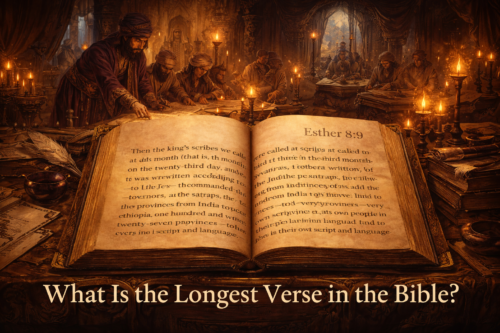
In most English translations, the longest verse in the Bible is found in Esther 8:9. This verse stands out because of its length and detailed description of a royal decree sent throughout the Persian empire.
The verse records a message issued under King Ahasuerus, also known historically as Xerxes. It carefully lists provinces, languages, and officials who received the decree. Its extended structure makes it significantly longer than other individual verses.
The reason this verse is so long is not poetic expression but administrative detail. It documents the wide-reaching communication network of the Persian Empire, emphasizing how broadly the message was distributed to protect the Jewish people.
Why Esther 8:9 Is Considered the Longest Verse
The length of Esther 8:9 comes from the repetition of regions and languages. The Persian Empire governed vast territories, and official decrees had to be written in many scripts and dialects.
This verse carefully lists provinces stretching from India to Ethiopia. By including each administrative division, the writer preserved historical and political accuracy. That detailed listing adds many words, making the verse unusually long.
Unlike poetic books that use metaphor and repetition for artistic effect, this verse functions as legal documentation. It reflects real governance practices of the ancient world, which required clarity and inclusiveness across diverse populations.
Because of this structure, the verse often surpasses other lengthy verses in word count. However, exact word totals can vary depending on the English Bible translation being used.
Do Bible Translations Affect the Length?
Yes, translation differences can affect which verse appears longest. Some translations use more formal language, while others simplify phrases. These variations slightly adjust word counts without changing the meaning of the passage.
For example, the King James Version is known for formal phrasing, which can sometimes increase word count. More modern translations may shorten sentences while retaining the same essential information and historical references.
Despite translation differences, Esther 8:9 consistently ranks among the longest verses across most English versions. That consistency strengthens its reputation as the longest verse in Scripture.
It is important to note that the original Hebrew manuscripts were not divided into verses. Verse numbering was added centuries later to help readers navigate the Bible more easily.
Historical Context of Esther 8:9
The Book of Esther is set during the reign of a Persian king ruling over a vast empire. The Jewish people were living in exile, scattered across many provinces under foreign authority.
A decree had previously been issued threatening the destruction of the Jews. Through courage and divine timing, Queen Esther intervened, leading to a new decree that allowed the Jewish people to defend themselves.
The long verse documents the official counter-decree written to reverse the earlier threat. It emphasizes how urgent and widespread the communication needed to be to reach every province quickly.
This historical moment highlights themes of courage, providence, and deliverance. The detailed record within the verse underscores how seriously the Persian administration handled legal proclamations across its territories.
Why People Search for the Longest Verse
Many searchers are simply curious about Bible facts. Questions like the longest verse, shortest verse, or longest chapter appeal to both new readers and seasoned Bible students.
Others are preparing sermons, lessons, or Bible quizzes. Trivia about Scripture often captures attention and opens the door to deeper discussion about historical context and theological meaning.
Some readers are comparing Bible translations and enjoy examining how structure and formatting influence the reading experience. Word count comparisons can become surprisingly engaging for passionate Bible learners.
Ultimately, this question reflects a desire to understand Scripture better. Even small details, such as verse length, can lead readers into richer exploration of biblical history and meaning.
Comparing the Longest Chapter and Shortest Verse
While discussing the longest verse, it helps to mention related superlatives in Scripture. The longest chapter in the Bible is Psalm 119, known for its extensive meditation on God’s Word.
In contrast, the shortest verse in many English translations is John 11:35, famously translated as “Jesus wept.” This short verse carries profound emotional and theological weight despite its brevity.
These comparisons highlight how Scripture varies dramatically in structure. Some passages are brief and poetic, while others are lengthy and administrative. Both styles serve important purposes within the biblical narrative.
Understanding these contrasts enriches Bible study. It shows that meaning is not determined by length, but by context, purpose, and divine inspiration throughout Scripture.
The Structure of Esther as a Book
The Book of Esther stands out because it never explicitly mentions God by name. Yet its message clearly demonstrates divine providence working behind the scenes.
The story unfolds in dramatic scenes filled with tension, banquets, royal intrigue, and unexpected reversals. The long verse in chapter eight appears near the climax of this unfolding deliverance story.
Its legal language contrasts sharply with earlier narrative sections. This shift in tone reinforces the seriousness of the decree and the significance of the turning point in Jewish survival.
By including extensive administrative detail, the author strengthens the realism of the account. It reminds readers that these events took place within a powerful and complex empire.
Why Verse Length Matters in Study
Although verse length does not determine spiritual importance, it can draw attention to certain passages. A long verse often signals detailed instruction, genealogy, or historical record.
Students of Scripture sometimes analyze structure to understand literary patterns. Long verses can reveal emphasis, transitions, or significant shifts in narrative focus.
In the case of Esther 8:9, the length underscores the seriousness of the decree and the vast reach of the Persian government.
Rather than being random trivia, the length reflects historical reality. It also highlights how God used political systems to accomplish preservation and protection for His people.
Conclusion
The longest verse in the Bible is widely recognized as Esther 8:9 in most English translations. Its length results from detailed administrative language describing a royal decree.
Though it may appear as simple trivia, this verse sits within a powerful story of courage, deliverance, and divine providence.
Exploring questions like “what is the longest verse in the bible” often leads readers to a deeper understanding of Scripture, its historical context, and its spiritual richness. Sometimes even a question about length can spark meaningful discovery within the pages of the Bible.