
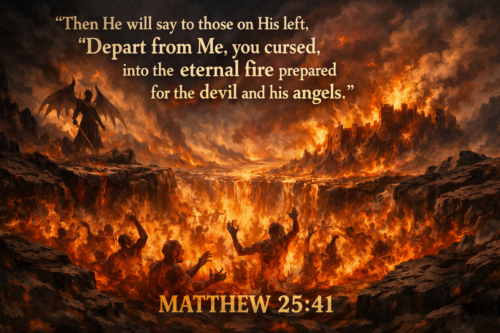
The verses about hell in the Bible present clear warnings about judgment, accountability, and eternal consequences. These scriptures remind readers that God is holy and just, and that choices made in this life carry lasting spiritual significance beyond the present world.
The verses about hell in the Bible also highlight the contrast between God’s justice and His mercy. While hell represents separation from God, these passages point to the seriousness of sin and the need for repentance and obedience.
By studying the verses about hell in the Bible, readers gain a deeper understanding of biblical truth, spiritual responsibility, and the importance of salvation. These scriptures encourage reflection, humility, and a renewed commitment to live according to God’s will.
25 verses about hell in the Bible

In this list of 25 verses about hell in the Bible, readers will find clear biblical teachings on judgment, eternity, and accountability. These scriptures provide insight into God’s justice, the reality of hell, and the importance of repentance and salvation.
- Matthew 5:22
“But I tell you that anyone who is angry with a brother or sister will be subject to judgment. Again, anyone who says to a brother or sister, ‘Raca,’ is answerable to the court. And anyone who says, ‘You fool!’ will be in danger of the fire of hell.” - Matthew 5:29
“If your right eye causes you to stumble, gouge it out and throw it away. It is better for you to lose one part of your body than for your whole body to be thrown into hell.” - Matthew 10:28
“Do not be afraid of those who kill the body but cannot kill the soul. Rather, be afraid of the One who can destroy both soul and body in hell.” - Matthew 18:9
“If your eye causes you to stumble, gouge it out and throw it away. It is better for you to enter life with one eye than to have two eyes and be thrown into the fire of hell.” - Matthew 23:33
“You snakes! You brood of vipers! How will you escape being condemned to hell?” - Mark 9:43
“If your hand causes you to stumble, cut it off. It is better for you to enter life maimed than with two hands to go into hell, where the fire never goes out.” - Mark 9:45
“And if your foot causes you to stumble, cut it off. It is better for you to enter life crippled than to have two feet and be thrown into hell.” - Mark 9:47
“And if your eye causes you to stumble, pluck it out. It is better for you to enter the kingdom of God with one eye than to have two eyes and be thrown into hell.” - Luke 12:5
“But I will show you whom you should fear: Fear him who, after your body has been killed, has authority to throw you into hell. Yes, I tell you, fear him.” - Luke 16:23
“In Hades, where he was in torment, he looked up and saw Abraham far away, with Lazarus by his side.” - 2 Thessalonians 1:9
“They will be punished with everlasting destruction and shut out from the presence of the Lord and from the glory of his might.” - Jude 1:7
“In a similar way, Sodom and Gomorrah and the surrounding towns gave themselves up to sexual immorality and perversion. They serve as an example of those who suffer the punishment of eternal fire.” - Revelation 14:10
“They, too, will drink the wine of God’s fury, which has been poured full strength into the cup of his wrath. They will be tormented with burning sulfur in the presence of the holy angels and of the Lamb.” - Revelation 20:10
“And the devil, who deceived them, was thrown into the lake of burning sulfur, where the beast and the false prophet had been thrown. They will be tormented day and night for ever and ever.” - Revelation 20:14
“Then death and Hades were thrown into the lake of fire. The lake of fire is the second death.” - Revelation 20:15
“Anyone whose name was not found written in the book of life was thrown into the lake of fire.” - Revelation 21:8
“But the cowardly, the unbelieving, the vile, the murderers, the sexually immoral, those who practice magic arts, the idolaters and all liars—they will be consigned to the fiery lake of burning sulfur. This is the second death.” - Psalm 9:17
“The wicked go down to the realm of the dead, all the nations that forget God.” - Proverbs 15:24
“The path of life leads upward for the prudent to keep them from going down to the realm of the dead.” - Isaiah 66:24
“And they will go out and look on the dead bodies of those who rebelled against me; the worms that eat them will not die, the fire that burns them will not be quenched, and they will be loathsome to all mankind.” - Daniel 12:2
“Multitudes who sleep in the dust of the earth will awake: some to everlasting life, others to shame and everlasting contempt.” - Matthew 13:41-42
“The Son of Man will send out his angels, and they will weed out of his kingdom everything that causes sin and all who do evil. They will throw them into the blazing furnace, where there will be weeping and gnashing of teeth.” - Matthew 13:50
“And throw them into the blazing furnace, where there will be weeping and gnashing of teeth.” - 2 Peter 2:4
“For if God did not spare angels when they sinned, but sent them to hell, putting them in chains of darkness to be held for judgment.” - Hebrews 10:27
“But a fearful expectation of judgment and of raging fire that will consume the enemies of God.”
What the Bible Says About Hell
The Bible presents hell as a real and serious spiritual reality, not merely symbolic language. Throughout Scripture, hell is described as the final destination for those who reject God’s authority, truth, and offer of salvation despite repeated warnings.
Different biblical terms such as hell, Hades, Sheol, Gehenna, and the lake of fire are used to explain aspects of judgment and separation. While each term carries unique meaning, they collectively point to a place of consequence beyond physical death.
The Bible does not describe hell to create fear without purpose. Instead, these passages emphasize God’s holiness and justice, helping readers understand that moral choices matter and that God holds humanity accountable for rebellion and persistent disobedience.
Ultimately, Scripture shows that hell is not God’s desire for anyone. Verses about hell in the Bible repeatedly point readers toward repentance, humility, and faith, making it clear that God offers mercy and forgiveness before judgment takes place.
Hell as a Place of Judgment
Hell is consistently connected to divine judgment in the Bible. Scripture teaches that God is just and righteous, and that He judges sin fairly. Hell represents the final outcome of refusing God’s truth and choosing a life apart from Him.
The Bible emphasizes that judgment is not random or cruel. God’s judgment is based on truth, righteousness, and complete knowledge of every person’s heart and actions. Hell reflects justice, not impulse, reinforcing God’s moral authority.
Verses about hell in the Bible show that judgment follows persistent rebellion, not momentary failure. God’s patience and mercy are repeatedly offered, but Scripture teaches that continual rejection eventually leads to accountability and separation from His presence.
Understanding hell as judgment encourages self-examination rather than despair. These teachings call readers to reflect on their spiritual direction, recognize the seriousness of sin, and respond to God’s invitation for repentance and restored relationship.
Jesus’ Teachings About Hell
Jesus spoke about hell more directly than many realize, often warning people with urgency and compassion. His teachings made clear that eternal consequences follow spiritual choices, and that ignoring God’s truth carries serious outcomes beyond this life.
Rather than using fear for control, Jesus addressed hell to awaken hearts. His words challenged hypocrisy, religious pride, and unrepentant sin, emphasizing the importance of sincere faith and obedience rather than outward appearances or traditions.
Jesus often contrasted hell with eternal life, making His message clear and balanced. While warning about judgment, He consistently pointed toward grace, forgiveness, and salvation, showing that repentance and faith can change one’s eternal destination.
Through parables and teachings, Jesus encouraged people to choose life over destruction. His discussions about hell were meant to guide, not condemn, urging listeners to turn toward God’s mercy while time and opportunity remained.
Conclusion
The verses about hell in the Bible remind readers of God’s justice, holiness, and moral authority. Studying these verses about hell in the Bible encourages reflection, repentance, and a deeper appreciation for salvation, guiding believers toward faithful and obedient living.