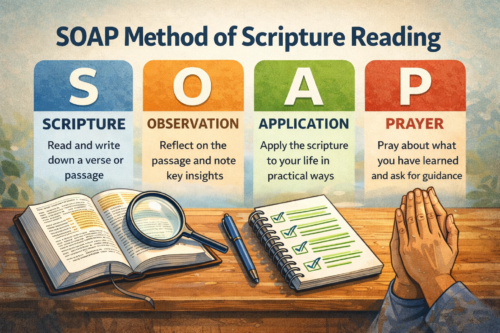
The SOAP method of Scripture reading offers a simple, structured approach that helps believers slow down and connect deeply with God’s Word. It removes confusion and replaces it with clarity and purpose.
SOAP is easy to learn, flexible to use, and powerful for spiritual growth. Whether you are new to Bible study or have been reading Scripture for years, this method can transform your daily time with God.
This guide explains the SOAP method step by step, shows how to use it practically, and helps you avoid common mistakes. By the end, you will feel confident using SOAP consistently.
What Is the SOAP Method of Scripture Reading?
The SOAP method of Scripture reading is a Bible study technique designed to help readers engage intentionally with God’s Word. It focuses on understanding, reflection, and personal application.
SOAP is an acronym that stands for Scripture, Observation, Application, and Prayer. Each step guides you through a meaningful interaction with a Bible passage.
Instead of rushing through verses, the SOAP method encourages you to pause and reflect. It helps transform Bible reading from a routine habit into a personal conversation with God.
This method is widely used in devotionals, small groups, youth ministries, and personal quiet times. Its simplicity makes it accessible for all ages and spiritual levels.
SOAP does not require theological training or special tools. A Bible, a notebook, and a willing heart are enough to get started.
One reason SOAP is effective is that it balances reading, thinking, and praying. You are not just consuming Scripture. You are responding to it.
By writing things down, readers often remember passages better and notice details they would normally miss. This strengthens understanding and spiritual growth over time.
The SOAP method is especially helpful for people who struggle with consistency. The clear structure removes guesswork and creates a repeatable daily habit.
What Does SOAP Stand For?
Scripture
The first step of the SOAP method is Scripture. This involves choosing a Bible passage and writing it out word for word.
Writing Scripture slows you down and helps the message sink deeper into your heart. It also improves focus and reduces distractions.
You can select passages from a daily devotional, reading plan, or simply open the Bible and read until something stands out.
Observation
Observation focuses on understanding what the passage is saying. This step asks you to look closely at the details within the text.
Pay attention to repeated words, commands, promises, or warnings. Notice who is speaking and who is being addressed.
This step is about discovery, not interpretation. You are observing what the text clearly shows before applying it personally.
Application
Application asks how the Scripture applies to your life today. This is where the Word becomes personal and practical.
Ask what God is teaching you and how it should change your actions, thoughts, or attitudes. Keep applications specific and realistic.
Prayer
Prayer completes the SOAP method. It turns Scripture and application into a conversation with God.
Pray for strength to obey, wisdom to understand, and gratitude for what God reveals through His Word.
How to Use the SOAP Method Step by Step
Using the SOAP method is simple and does not require a large time commitment. Most people complete a SOAP study in ten to fifteen minutes.
Begin by finding a quiet place where you can focus. Open your Bible and read a passage slowly and carefully.
Write the chosen Scripture in your notebook. Do not rush this step. Let each word register as you write.
Next, move into Observation. Write down what stands out. Focus on facts, themes, and key phrases within the passage.
Avoid jumping ahead to meaning or application too quickly. Let the text speak for itself first.
Then write your Application. Ask how this Scripture applies to your current situation. Be honest and specific in your response.
Finally, write a Prayer based on what you have learned. Use the Scripture to guide your words.
Thank God for His Word and ask for help living it out. End your time with reflection and gratitude.
Consistency matters more than length. A short daily SOAP study is more effective than occasional long sessions.
Example of the SOAP Method in Action
To see how the SOAP method works, consider Proverbs 3:5–6. This passage speaks about trust, guidance, and surrender to God.
Scripture:
“Trust in the Lord with all your heart and lean not on your own understanding.”
Writing the verse slows the mind and highlights the command to trust completely.
Observation:
The verse emphasizes full trust, not partial trust. It contrasts God’s wisdom with human understanding.
The word “all” suggests total dependence, not selective obedience.
Application:
This verse reminds me to stop relying solely on my plans. I need to trust God in decisions where I feel uncertain or anxious.
It challenges me to surrender control instead of seeking comfort in my own logic.
Prayer:
Lord, help me trust You fully, even when I do not understand the situation. Teach me to rely on Your wisdom instead of my own.
This example shows how Scripture becomes personal through reflection and prayer.
Benefits of the SOAP Method of Scripture Reading
The SOAP method encourages deeper engagement with Scripture. It helps readers move beyond surface reading into meaningful understanding.
Writing Scripture and observations improves focus and memory retention. This makes Bible study more impactful and memorable.
SOAP also strengthens personal prayer life. Prayers become more Scripture-centered and intentional.
Another benefit is consistency. The structured format removes uncertainty and builds a reliable daily habit.
SOAP is flexible and adaptable. It works for short devotionals or longer study sessions.
This method also promotes spiritual growth by encouraging obedience and reflection.
Over time, readers develop greater confidence in understanding Scripture independently.
Common Mistakes to Avoid When Using the SOAP Method
One common mistake is rushing through the steps. SOAP is meant to slow you down, not speed you up.
Another mistake is overcomplicating observations. Focus on what the text clearly says.
Some people write vague applications. Effective application should be personal and actionable.
Skipping the prayer step weakens the process. Prayer connects learning with spiritual transformation.
Avoid treating SOAP like homework. It is a relationship-building tool, not a checklist.
Tips for Staying Consistent With the SOAP Method
Set a specific time each day for your SOAP study. Consistency builds habit.
Use a dedicated journal or digital note app. This keeps your studies organized.
Start small and stay realistic. Even five minutes daily can be powerful.
Study with a friend or group for accountability and encouragement.
Most importantly, approach SOAP with openness and humility.
Conclusion
The SOAP method of Scripture reading is a simple yet powerful way to grow spiritually. It brings clarity, structure, and purpose to Bible study.
By slowing down, reflecting deeply, and praying intentionally, Scripture becomes alive and personal. If you desire a deeper connection with God’s Word, the SOAP method is an excellent place to start. Try it daily and allow God’s Word to transform your heart and life.