Trees in the Bible are a recurring and significant symbol throughout Scripture. More than just part of the natural landscape, they carry deep spiritual meaning and are often used to illustrate God’s relationship with humanity, moral lessons, and the unfolding of divine plans.
The Bible references various types of trees, each imbued with unique symbolism tied to their cultural and historical contexts. From the earliest chapters of Genesis to the visions in Revelation, trees symbolize life, judgment, growth, and restoration.
Exploring the presence of trees in Scripture helps believers understand biblical themes more fully. It offers insight into how ancient people viewed creation and God’s promises, revealing truths that continue to inspire faith and reflection today.
This article seeks to provide a comprehensive overview of the major trees mentioned in the Bible, their symbolic meanings, and their theological significance. It will also explore how Jesus used tree imagery in His teachings and parables.
Trees in the Bible: A Guide to Their Meaning and Significance
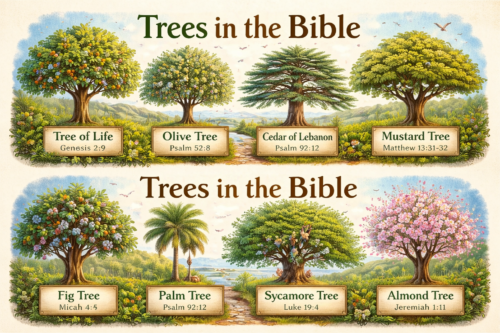
In this section, you’ll discover a detailed list of the most important trees mentioned throughout the Bible. Each tree carries its own unique symbolism and plays a special role in biblical stories, teachings, and prophecies. From ancient symbols of life and blessing to lessons about faith and judgment, these trees offer rich insights into God’s message and the spiritual lessons woven into Scripture.
Whether you’re curious about the Tree of Life or want to understand the deeper meaning behind the olive or fig tree, this guide will help you explore the profound significance of trees in biblical history and theology.
1. Tree of Life
-
Where: Genesis 2:9, Revelation 2:7, Revelation 22:2,14
-
Significance:
The Tree of Life is in the Garden of Eden. It symbolizes eternal life and God’s provision for humanity. After Adam and Eve sinned, they were barred from eating from this tree to prevent them from living forever in a fallen state. In Revelation, it reappears as a symbol of restored eternal life in the new heaven and earth.
2. Tree of the Knowledge of Good and Evil
-
Where: Genesis 2:9, Genesis 3
-
Significance:
Also in the Garden of Eden, this tree represents the boundary God set for Adam and Eve. Eating its fruit gave them the knowledge of good and evil, which led to the fall of humanity. It symbolizes the choice between obedience and disobedience to God.
3. Olive Tree
-
Where: Multiple, including Genesis 8:11 (Noah’s dove brought back an olive leaf), Romans 11, Psalm 52:8
-
Significance:
The olive tree is a symbol of peace, prosperity, and blessing. Noah’s dove brought an olive leaf to show the flood was receding, signaling peace between God and the earth. Olive oil was used for anointing kings and priests, symbolizing God’s blessing and presence.
4. Fig Tree
-
Where: Genesis 3:7, Matthew 21:18-22, Mark 11:12-25, Luke 13:6-9
-
Significance:
The fig tree first appears when Adam and Eve used fig leaves to cover themselves after sinning. Jesus uses the fig tree in parables to teach about faith, judgment, and repentance. A barren fig tree can symbolize spiritual barrenness or judgment.
5. Cedars of Lebanon
-
Where: 1 Kings 5:6-10, Psalm 92:12, Isaiah 2:13
-
Significance:
Cedars were known for their strength, size, and durability. They symbolized majesty, strength, and endurance. Solomon used cedars to build the temple, symbolizing the glory of God’s dwelling place.
6. Palm Tree
-
Where: Psalm 92:12, John 12:13, Leviticus 23:40
-
Significance:
The palm tree symbolizes victory, peace, and righteousness. People waved palm branches to welcome Jesus into Jerusalem on Palm Sunday. It also represents flourishing and prosperity.
7. Almond Tree
-
Where: Jeremiah 1:11-12, Ecclesiastes 12:5
-
Significance:
The almond tree symbolizes watchfulness and God’s quick action. In Jeremiah, God compares the almond tree’s early blooming to His watchful care over His word.
8. Sycamore Tree
-
Where: 1 Kings 19:5, Luke 19:1-10
-
Significance:
The sycamore tree was a large shade tree. Elijah rested under one, and Zacchaeus climbed one to see Jesus. It symbolizes shelter, opportunity, and spiritual seeking.
9. Mustard Tree (Mustard Seed)
-
Where: Matthew 13:31-32, Luke 13:18-19
-
Significance:
Jesus used the mustard seed to illustrate the Kingdom of God’s growth from small beginnings into something large and sheltering. It symbolizes faith, growth, and expansion.
10. Vine / Grapevine
-
Where: John 15:1-8, Psalm 80:8-16, Isaiah 5:1-7
-
Significance:
The vine symbolizes Israel and God’s people, and Jesus calls Himself the “true vine.” It represents life, fruitfulness, dependence on God, and spiritual nourishment.
Symbolism and Theological Significance of Trees
Trees often symbolize life and growth, both physical and spiritual. The Tree of Life, mentioned in Genesis and Revelation, represents eternal life and God’s ongoing provision for humanity.
Trees can also represent nations or peoples, with their health or barrenness symbolizing spiritual vitality or judgment. For example, Israel is sometimes described as a fig tree, with its fruitfulness reflecting faithfulness to God.
In prophecy, trees appear in visions to show God’s plan for restoration or judgment. For instance, Ezekiel describes a valley of dry bones becoming alive, symbolized by trees that represent a renewed nation (Ezekiel 37).
Trees as Metaphors for People and Spiritual Conditions
Throughout the Bible, trees serve as powerful metaphors for people’s spiritual states and life conditions. Just as trees can be healthy or withered, fruitful or barren, the Bible uses this imagery to describe human faith, righteousness, and moral standing before God.
One of the clearest examples is found in Psalm 1:3, where the righteous person is compared to a tree planted by streams of water. This tree yields fruit in season and does not wither, symbolizing a life sustained by God’s presence and flourishing in faith.
Conversely, trees that fail to bear fruit represent spiritual barrenness or disobedience. Jesus used the fig tree as a metaphor for judgment when He cursed a barren fig tree in Mark 11. This act symbolized the consequences of unproductive or hypocritical faith.
In the Old Testament, Israel is often portrayed as a fig tree or an olive tree. Prophets used these images to convey Israel’s spiritual health, warning that failure to remain faithful to God would result in being cut off or destroyed.
The metaphor of trees also extends to leaders and nations. A strong, flourishing tree symbolizes wise, godly leadership, while a withered tree signals corruption, failure, or divine judgment. Jeremiah, for example, warned that leaders who stray from God’s ways will be like trees with no fruit.
Spiritual fruitfulness is a recurring theme in these metaphors. Just as a healthy tree produces good fruit, believers are called to bear the fruit of the Spirit, such as love, kindness, and faithfulness (Galatians 5:22-23). The absence of fruit indicates a life disconnected from God.
Moreover, trees illustrate endurance and resilience in the spiritual journey. A well-rooted tree can withstand storms and drought, symbolizing how faith anchored in God helps believers endure trials and challenges without falling away.
Warnings against spiritual barrenness use tree imagery to emphasize the urgency of repentance. Parables and prophetic messages make clear that God expects His people to be fruitful, reflecting His character and purposes in their lives.
Trees in Biblical Poetry and Prophecy
Trees play a significant role in biblical poetry and prophecy, often symbolizing blessing, stability, judgment, and restoration. Poets and prophets use vivid tree imagery to communicate deep spiritual truths and divine intentions in ways that resonate emotionally and visually.
In the Psalms, the righteous person is frequently compared to a flourishing tree planted by streams of water. Psalm 1:3 beautifully illustrates this, showing that those who delight in God’s law are nourished, strong, and fruitful, standing firm through life’s challenges.
Trees symbolize God’s blessing and provision in poetic language. The image of a thriving tree evokes security, growth, and prosperity, reflecting the spiritual vitality that comes from trusting in God and living according to His ways.
Prophets also used trees as symbolic tools in their messages. Isaiah, for example, described Israel and its leaders as majestic cedars, emphasizing strength and grandeur but also warning of downfall if they turned away from God (Isaiah 6:13).
Ezekiel’s visions contain powerful tree imagery as well. In Ezekiel 17, the cedar tree represents the kingdom of Judah, its fate intertwined with political alliances and divine judgment. The cutting down and regrowth of the tree symbolize destruction and eventual restoration.
Tree metaphors extend to apocalyptic prophecy in the book of Revelation. The Tree of Life reappears in the new creation, offering healing and eternal life to those who dwell in God’s presence (Revelation 22:2). This symbolizes ultimate restoration and hope.
These poetic and prophetic uses of trees convey messages beyond their literal meaning. Trees represent spiritual states, God’s judgment, promises of renewal, and the hope of redemption, often linking earthly experiences with eternal realities.
The recurring tree imagery across biblical poetry and prophecy invites readers to reflect on their spiritual condition. Are they like flourishing trees rooted in God’s word, or like barren trees facing judgment and removal?
Through the rich symbolism of trees, biblical writers communicate complex theological ideas in memorable, relatable ways. This makes the Scriptures accessible and impactful, inspiring faith and repentance.
Conclusion
Trees in the Bible are much more than simple plants; they carry deep spiritual meaning and serve as powerful symbols throughout Scripture. From the Garden of Eden’s Tree of Life to the fig and olive trees used in Jesus’ teachings, these trees reveal truths about life, faith, judgment, and God’s enduring promises.
By exploring trees in the Bible, we gain insight into how God communicates with His people through nature and metaphor. These trees encourage believers to root their lives in God’s word, bear spiritual fruit, and remain faithful through life’s challenges.
Ultimately, trees in the Bible remind us of God’s provision, the call to spiritual growth, and the hope of eternal restoration. Reflecting on these symbols can inspire a deeper faith and a more meaningful connection with Scripture.